|
Lessons you can share with your kids or with your inner child. #5 The Behavior Cycle: How our beliefs drive our thoughts, feelings and behaviorsI thought I’d show you one way to think about our behavior and where it comes from and how our beliefs about ourselves drive our thoughts and feelings. So, here’s a diagram. Start at the bottom with the ‘belief’ circle. When we believe something about ourselves, such as that we are stupid, or worthless or not good enough, we start to see the world through the eyes of that belief. That means that if I think I’m stupid, I will look for evidence of that in the things that happen around me and I won’t notice all the evidence that shows how brilliant I am. It’s as if I were to tell you to count the blue cars that pass your house for ten minutes, and then after ten minutes I ask you how many green cars went by – you may not be able to tell me because you were looking for the blue cars. Our beliefs act in the same way – we only find evidence that proves that they are true, not evidence that shows they are false. And – when we find evidence, our beliefs get stronger. 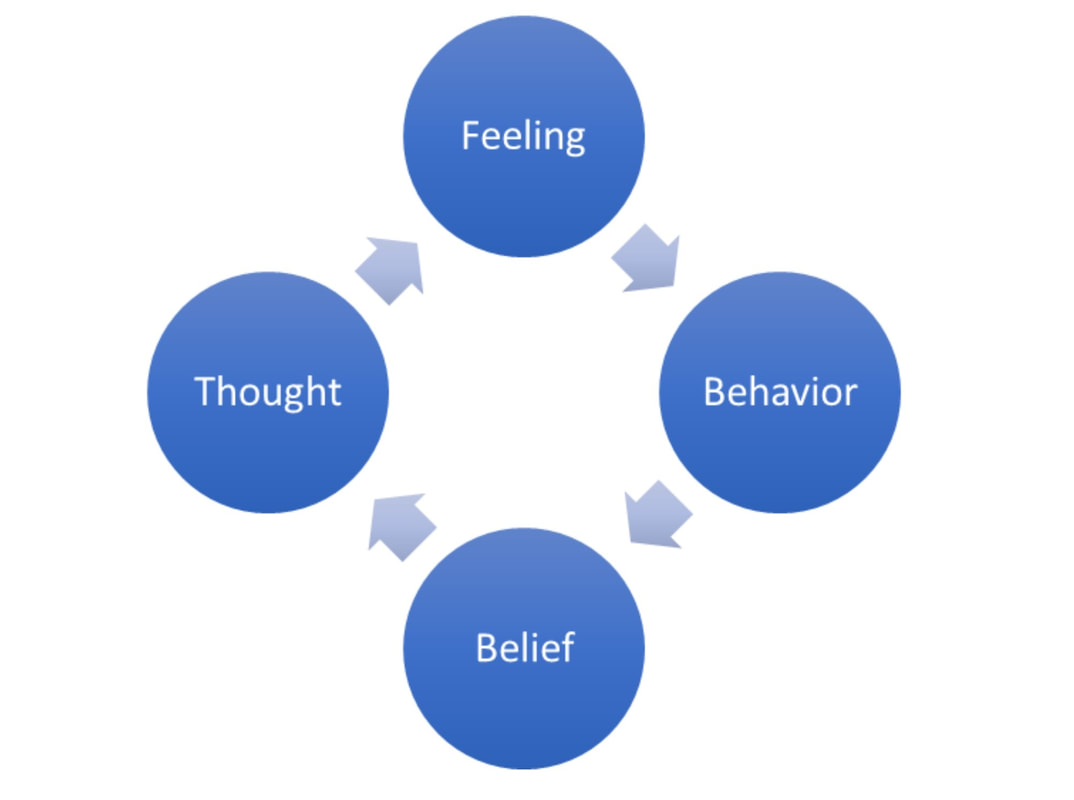 That leads to the next circle ‘Thought’. When we think we see evidence for a belief, we have a thought about it. That might be “I’m so stupid, I can’t believe I just did that”. Or “see I knew you wouldn’t be able to do that – there’s no point even trying.” These thoughts then give us a horrible feeling – could be a knot in the stomach and a feeling of despair, or anger, or jealousy or any number of feelings. Sometimes those feelings can result in behavior – such as yelling or hitting. Sometimes we withdraw and become depressed. Sometimes we hurt ourselves or someone else, as a way to numb the pain we feel, but it doesn’t work to do that. What does work is to recognize and challenge the belief (None of our beliefs are true – we made them up!!) That’s the work we have to do in order to change any of our unwanted behaviors. It can actually be fun figuring it out! There are countless possibilities and I challenge you to figure out one for yourself. Two made up examples: 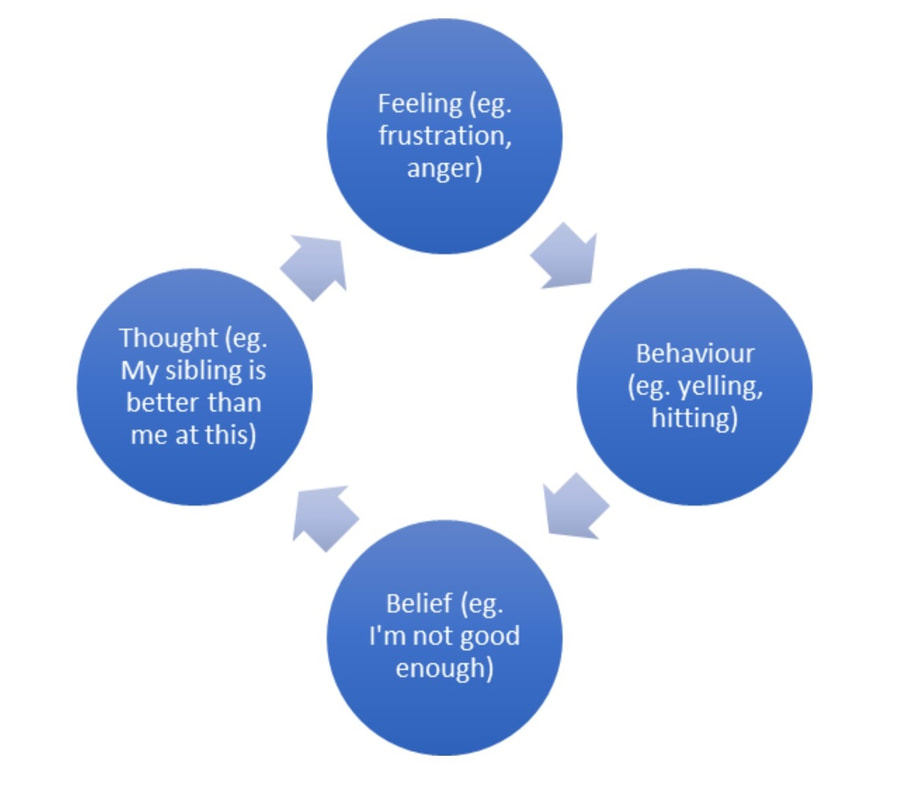 Here’s another: 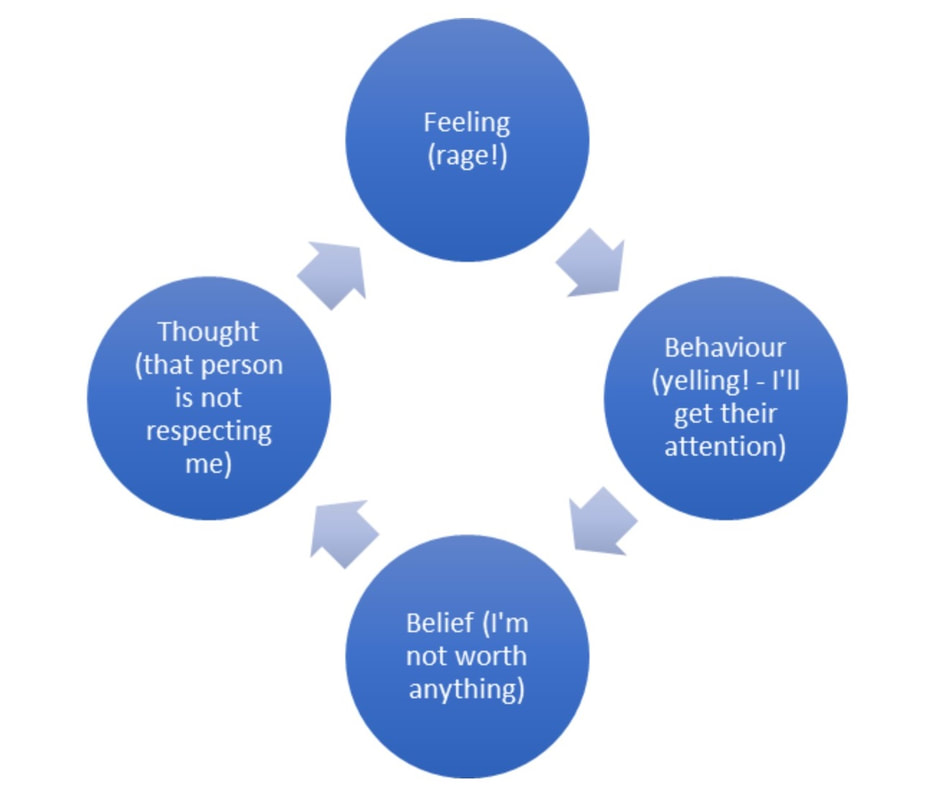 Action Steps:
Figure out your own belief cycles by being a feelings finder and a thought detective to link your feelings, and thoughts to your beliefs. What are the behaviors that your beliefs produce?
1 Comment
Bill
5/25/2023 07:20:26 am
Excellent and simple. This is very important stuff and you did a great job explaining it. Thank you Leave a Reply. |
Author I know firsthand the emotional and financial costs of having a troubled teenager and I don’t want that to happen to you. That's why I wrote my book What They Don't Teach in Prenatal Class: The Key to Raising Trouble-Free Kids and Teens (available on Amazon). Archives
April 2022
Categories
All
|

 RSS Feed
get in touch
Email: [email protected] Tel: (1) 604 720 2776
Sign Up to my newsletter
Get information and articles about how to raise happy, mentally-healthy, and addiction-free kids!